Shockwave Therapy for Plantar Fasciitis & Tendon Pain
Shockwave therapy uses controlled acoustic waves to boost blood flow, stimulate tissue repair, and break down scar tissue in stubborn injuries like plantar fasciitis, tennis elbow, and Achilles tendinopathy. Sessions are quick and non-invasive with no downtime, and a typical course is a short series of weekly visits, with home care between sessions helping the repair take hold.
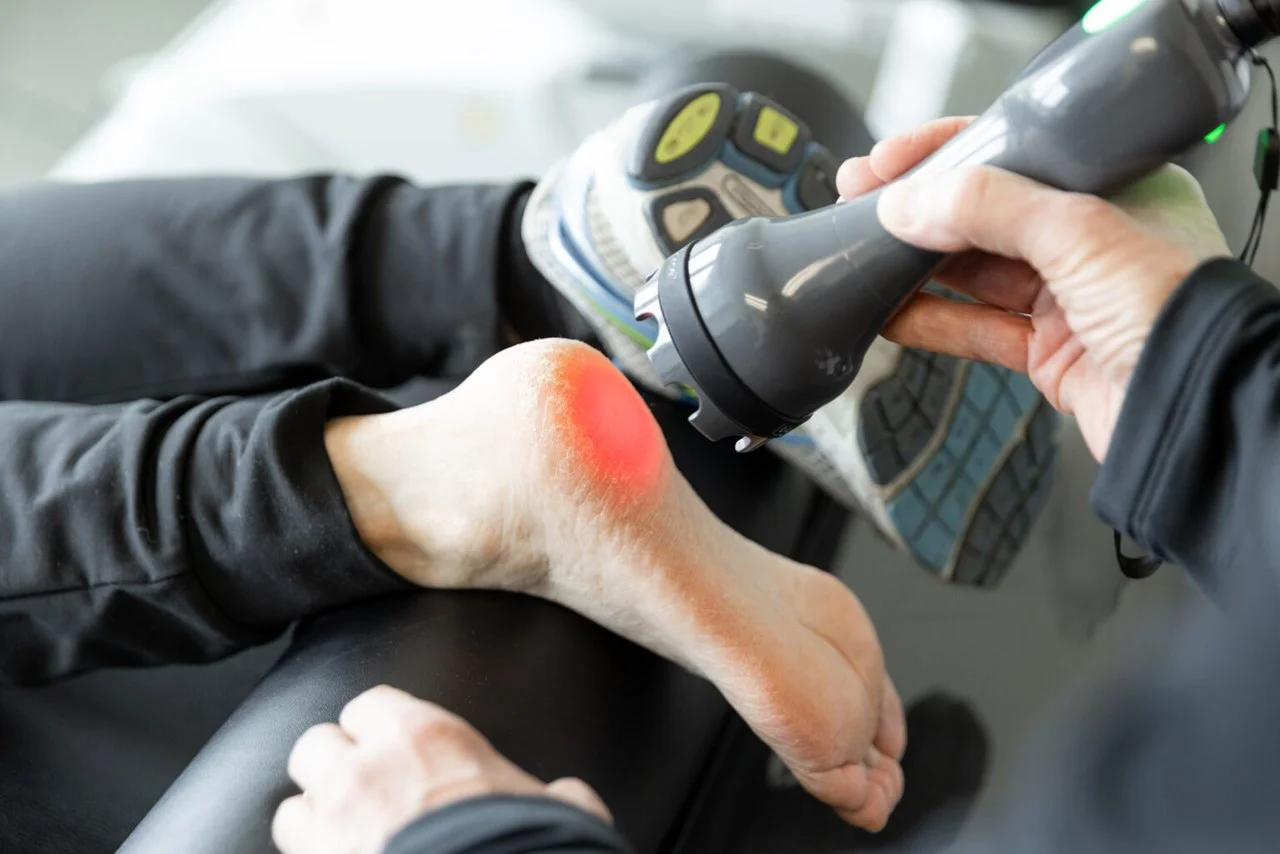
Some injuries simply will not quit. The heel that bites on your first steps out of bed, the elbow that flares every time you lift a grocery bag, the Achilles that stays sore no matter how long you rest it. When months of stretching, ice, and patience have not moved the needle, acoustic-wave shockwave therapy is one of the most useful tools in our Sudbury clinic, because it was built for exactly these stuck cases.
How shockwave therapy works
Despite the name, there is no electricity involved. A handheld device delivers controlled acoustic pulses, focused pressure waves, into the injured tissue. Those pulses do three useful things at once. They increase blood flow to an area that is usually starved of it, they stimulate the cells that build new tissue, and they help break down the scar tissue and calcium deposits that keep an old injury from finishing its repair. In plain terms, shockwave nudges your body to complete a healing job it abandoned partway through. MedlinePlus covers the family of heel and tendon disorders this kind of therapy targets.
Why stubborn tendon and fascia pain gets stuck
Tendons and the plantar fascia have a naturally thin blood supply, which is why a strained muscle can heal in weeks while a cranky Achilles drags on for a year. After the first month or so, most chronic tendon pain is no longer really an inflammation problem. The tissue has shifted into a degenerative state, a repair the body started and then quietly gave up on. That is why rest alone so often disappoints. It calms the symptoms, but it does not restart the rebuild, and the pain returns the moment you go back to activity. The National Institute of Arthritis and Musculoskeletal and Skin Diseases notes that most tendon problems come from repetitive motion and overuse rather than a single dramatic injury, which is also why they creep up gradually and overstay their welcome.
What it treats well
Shockwave earns its keep on a fairly specific list of conditions:
- Plantar fasciitis, the chronic heel pain that is sharpest with the first steps of the morning
- Tennis and golfer’s elbow
- Achilles tendinopathy and other chronic tendon irritations
- Calcium deposits that form in long-irritated tendons
- Soft-tissue pain that has outlasted rest, ice, and stretching
Plantar fasciitis in particular is one of the most common causes of heel pain, per the Cleveland Clinic, and it responds well to non-invasive care. Many of the others begin as sports and overuse injuries, the runner who ramped up mileage too quickly, the weekend tennis player, the parent who took up pickleball with real enthusiasm. It is also an option we consider for chronic knee and tendon pain, where an irritated patellar tendon, sometimes called jumper’s knee, keeps stairs and squats off the menu.
What a course of treatment looks like
Your first visit starts with an exam to confirm the pain is actually coming from the tendon or fascia and not somewhere upstream, because treating the wrong spot helps no one. If shockwave is a good fit, the sessions themselves are brief, usually a matter of minutes. We move the applicator over the sore area while it delivers rapid pulses that feel like firm, quick tapping. It can be tender directly over the injured spot, but the intensity is adjustable, and most people handle it comfortably without any numbing.
There is no downtime afterward. You walk out and go about your day. A typical course is a short series of sessions spaced about a week apart, with milder cases needing fewer visits and long-standing ones needing more. The American Academy of Orthopaedic Surgeons lists extracorporeal shockwave among the non-surgical options for persistent tendon pain. Because the therapy works by stimulating repair rather than masking sensation, improvement tends to build over the following weeks instead of switching off overnight, and it is common to notice steadier gains between sessions than immediately after one.
Home care between sessions
What you do between visits matters, because you are protecting a repair in progress.
- Keep moving, gently. Complete rest lets the tissue stiffen, while light activity and the stretches or loading exercises we give you help the new tissue organize along the lines it will actually be pulled.
- Avoid sudden spikes in activity. This is not the month to sign up for a road race or double your court time. Build back gradually.
- Mind your footwear if your heel is the problem. Supportive shoes, and going easy on barefoot walking over hard floors, take real strain off the plantar fascia.
- Ask us before leaning on anti-inflammatory medicine around your sessions. The therapy works partly by sparking a mild, useful repair response, and we will tell you what makes sense for your situation.
When to get checked
If heel, elbow, or tendon pain has hung on for more than a few months despite rest and home care, it has earned a proper evaluation, because chronic tendon problems rarely resolve by waiting harder. A few signs deserve prompt attention rather than a wait-and-see approach: a sudden pop followed by new weakness, an inability to push off the foot or grip with the hand, or swelling and warmth that appear quickly. Those can point to a tear or another problem that needs a different plan.
For everything else, the stubborn, grinding, months-old kind of pain, shockwave gives the body a second chance to finish healing. If a nagging heel or tendon has been setting the terms of your mornings, our team in Sudbury helps patients across MetroWest put it behind them and get back to running, walking, and playing without bracing for that first sharp step.
Ready to feel better?
Book your $49 new-patient spinal decompression session, exam and consultation included.