
Is Spinal Decompression Right for Your Back Pain?
Non-surgical spinal decompression uses a specialized traction table to gently stretch the spine, easing pressure on compressed discs and irritated nerves. It is often a strong option for chronic back pain, sciatica, and herniated or degenerative discs, with no medication, injections, or downtime. Sessions are comfortable, care unfolds over a series of visits, and a thorough exam comes first to confirm the therapy fits your condition.
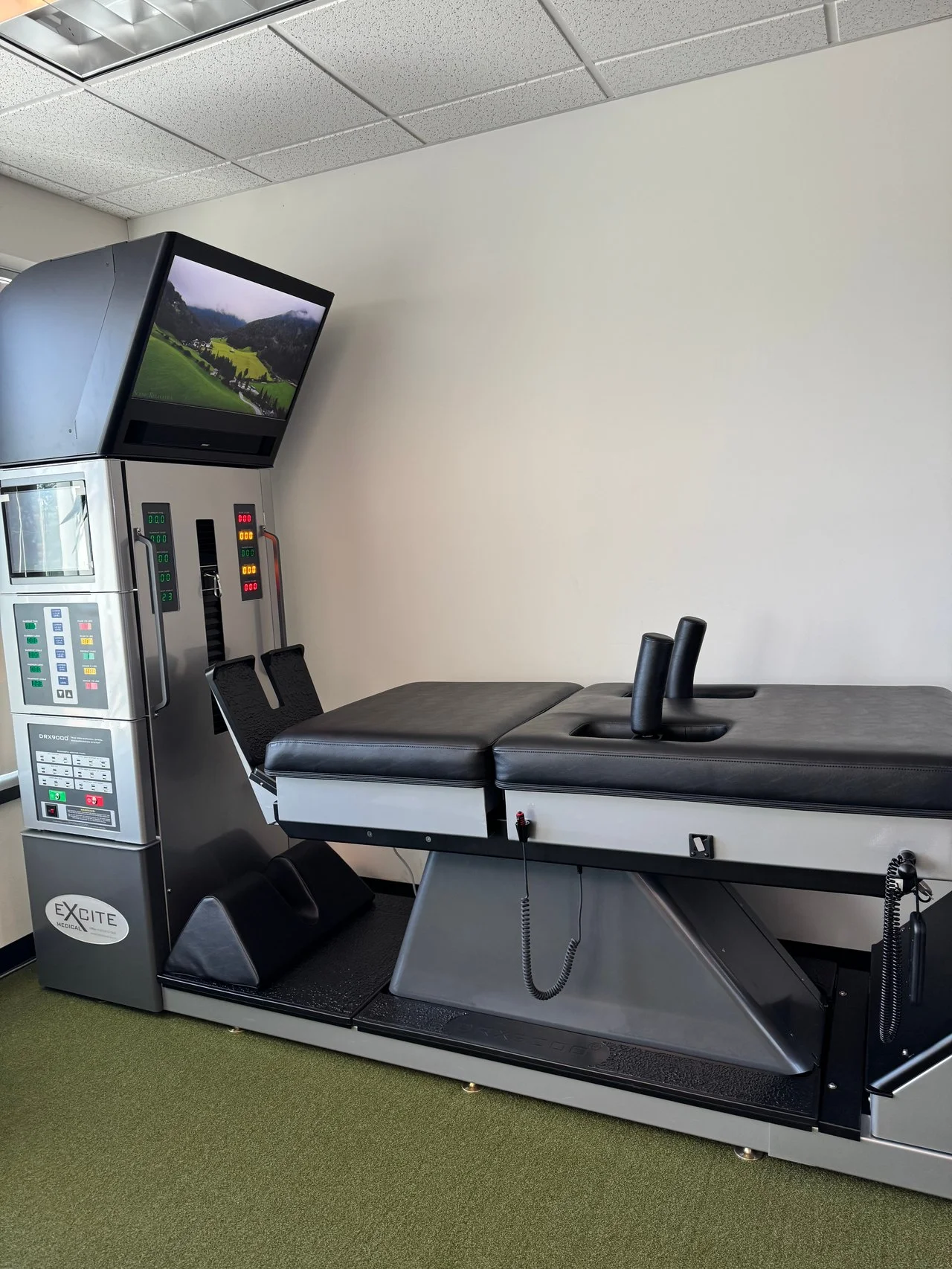
If back pain has become a constant in your life, you have probably wondered whether anything short of surgery can actually help. For many people in Sudbury and the surrounding MetroWest towns, non-surgical spinal decompression is exactly that option. It treats the pressure that drives many stubborn back problems, and it does so without needles, medication, or recovery time. Here is how it works, who benefits most, and how to tell whether it fits your back.
How spinal decompression works
Most stubborn back pain traces back to pressure. The discs that cushion your vertebrae can bulge, herniate, or thin with age, and when they do, they crowd the nerves that exit the spine. That is where spinal decompression for disc pressure earns its keep. A specialized traction table slowly and gently stretches your spine, creating space between the vertebrae. The stretch does two useful things at once. It reduces the mechanical load on compressed discs and irritated nerves, and it encourages circulation so oxygen and nutrients can reach the injured disc, a tissue with a poor blood supply that heals slowly on its own. MedlinePlus notes that most disc problems improve with conservative, non-surgical care, and decompression is one of the most direct ways to support that recovery.
The conditions it helps most
Decompression is not a cure-all, and an honest clinic will say so plainly. It works best on problems driven by pressure inside the spine, including:
- Herniated or bulging discs pressing on a nearby nerve root
- Sciatica and other pinched nerves
- Chronic lower back and neck pain that has resisted rest and medication
- Degenerative disc changes that have narrowed the space between vertebrae
Mayo Clinic explains that a herniated disc pressing on a nearby nerve is a common source of radiating pain, which is precisely the pressure decompression is built to relieve. That is why people living with chronic back pain or looking for lasting sciatica relief are often the ones who respond best. Their symptoms come from compression, and this therapy addresses the compression itself rather than muffling the signal.
What a session actually feels like
The experience surprises most first-time patients. You stay fully clothed and lie comfortably on the table while a padded harness secures your hips and torso. The table then applies a computer-controlled pull that alternates gentle stretching with periods of rest, so your muscles relax instead of guarding against the traction. Most people describe the sensation as a slow, pleasant stretch through the lower back. Some read, some listen to music, and more than a few doze off. There are no needles, no anesthesia, and no recovery period. You get up, walk out, and go on with your day.
How it differs from surgery and injections
It helps to see where decompression sits on the spectrum of back-pain care. Injections can calm inflammation around an irritated nerve, which brings real relief, but they do not change the disc pressure that caused the irritation, so the effect often fades. Surgery goes to the other extreme, physically removing or repairing disc material. It has its place for severe cases, but it comes with anesthesia, recovery time, and permanent changes to the spine. Decompression occupies the sensible middle ground. It works on the underlying pressure the way surgery aims to, but gradually and non-invasively, and choosing it first closes no doors if you ever need a more aggressive option later.
Signs you are a good candidate
You may be a strong candidate if your pain is chronic rather than a fresh strain, if it returns every time you think it has finally gone, or if it radiates into a leg or arm with numbness or tingling. Pain that worsens with sitting, a pattern typical of disc trouble, is another telling clue. On the other hand, decompression is generally not recommended during pregnancy or for people with severe osteoporosis, spinal fractures, implanted spinal hardware, or certain other conditions, which is why every course of care starts with a thorough exam and history. The National Institute of Arthritis and Musculoskeletal and Skin Diseases emphasizes matching back-pain treatment to the underlying cause rather than guessing, and that principle decides who belongs on the table and who should be referred elsewhere.
What a course of care looks like
Decompression is not a one-and-done treatment, because discs change slowly. After your initial evaluation confirms the therapy fits your condition, care typically unfolds as a series of visits spread over several weeks. Early sessions focus on easing the sharpest symptoms, and later ones build on that progress so the improvement holds. Many patients notice radiating pain begin to settle first, with lingering numbness and stiffness fading more gradually as pressure comes off the nerve. Along the way we re-check your progress and often pair the table work with gentle adjustments, targeted stretches, and simple habit changes, like breaking up long stretches of sitting, so the gains you make in the clinic are not undone between visits.
When back pain needs a different first step
A few symptoms call for prompt medical evaluation before any conservative therapy. The American Academy of Orthopaedic Surgeons identifies progressive leg weakness as a warning sign that deserves timely attention, and loss of bladder or bowel control alongside back pain is a medical emergency. Back pain that follows a hard fall or accident, or that arrives with fever or unexplained weight loss, should also be checked by a physician first. For the far more common story, an aching back that refuses to leave, an exam is the logical next step.
Chronic back pain has a way of shrinking your life. Shorter walks, skipped plans, and careful movements become normal before you notice. It does not have to stay that way. Our team in Sudbury helps patients from across MetroWest find out whether spinal decompression fits their situation, and when it does, we build a plan that relieves the pressure instead of masking it.
Spinal Decompression Therapy
Ready to feel better?
Book your $49 new-patient spinal decompression session, exam and consultation included.