
How Much Does Spinal Decompression Cost?
Spinal decompression is priced as a course of care, not a single visit, so the total depends on how severe and long-standing your condition is, how many sessions your plan calls for, and whether decompression is combined with adjustments or shockwave therapy. The honest way to a real number is a $49 new-patient exam that produces your exact plan, with insurance verified at the front desk first.
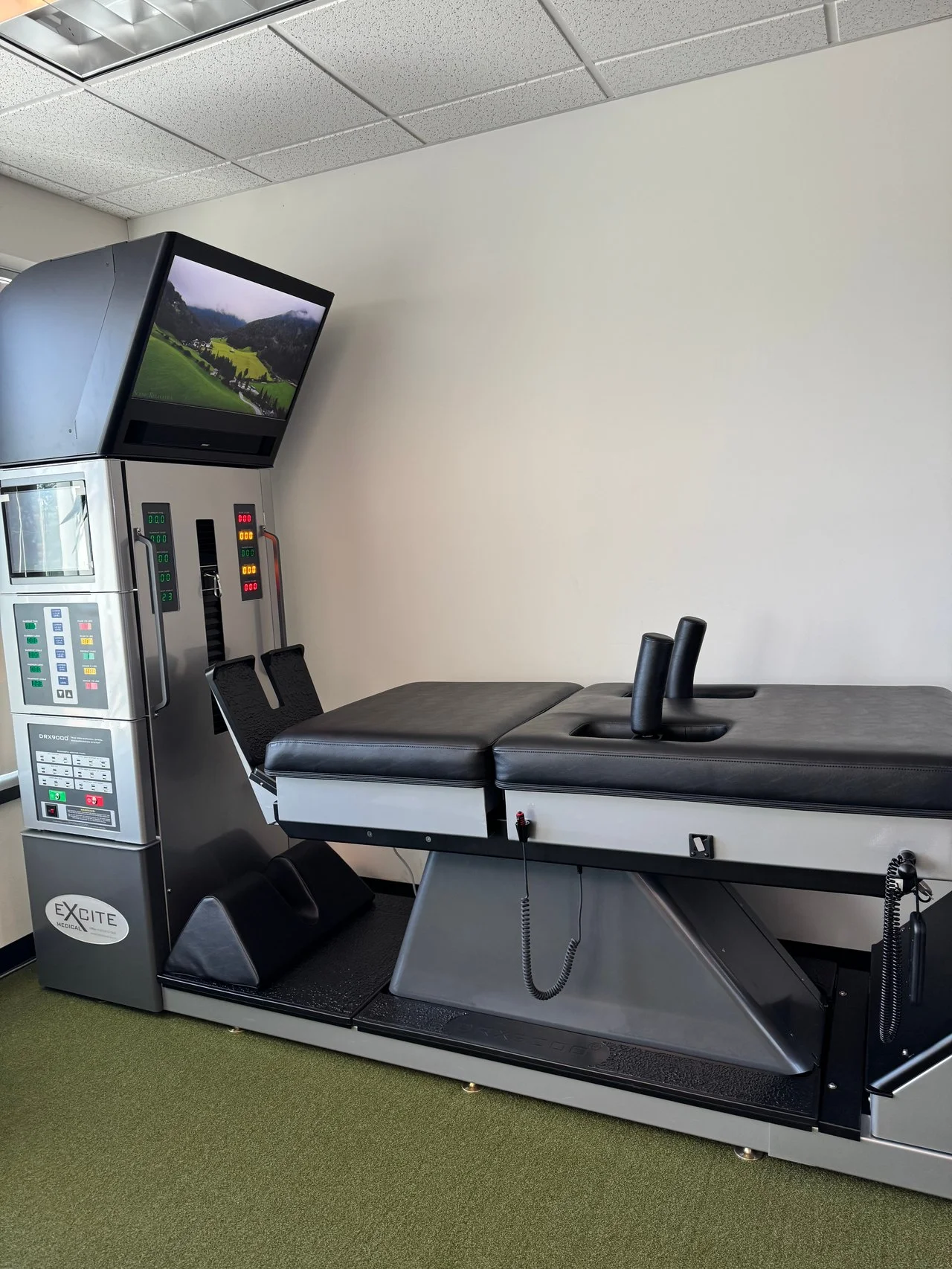
Search for spinal decompression prices and you will find numbers all over the map, sometimes wildly different for what sounds like the same treatment. That is not clinics being evasive. It is because decompression is not a product with a sticker price. It is a course of care planned around a specific spine, and the honest answer to “how much” depends on a handful of factors you can actually understand. Here is how the number gets built, and the fastest way to get a real one for your own back.
Why decompression is priced as a course, not a visit
Decompression works cumulatively. A specialized table gently stretches the spine through a series of visits, opening space between the vertebrae so a compressed disc can draw in fluid and nutrients and begin to heal. A single session can feel good, but it is the repetition that gives a disc time to change. Most herniated discs improve with conservative treatment, as MedlinePlus notes, and that improvement happens over weeks, not minutes.
This is why clinics prescribe a course of spinal decompression rather than selling visits off a menu, and why the total cost tracks the length of the course. A plan built for a mild, recent flare contains fewer sessions than one built for a disc that has been breaking down for a decade. Two patients can walk in with the same complaint and leave with very different plans, because their spines need different amounts of work.
The three factors that move the number most
Severity and duration of your condition. A disc flare that started last month usually needs a shorter course than a chronic problem with years of scar tissue and compensation patterns layered on top. The longer a disc has been compressed, the more work it typically takes to restore space and let the tissue settle.
The number of sessions in your plan. This follows directly from severity. Session count is the biggest lever on the total, which is why any quote offered before an exam is a guess dressed up as an answer.
Combined therapies. Decompression treats the disc, but the disc rarely suffers alone. Many plans pair the table with gentle adjustments to restore motion to the joints, or with shockwave therapy to address the irritated tissue around the spine. For most patients, decompression sits inside a broader plan of lower-back pain treatment rather than standing alone, and the mix of therapies changes the total.
The comparison that actually matters
“Cheap” and “expensive” both miss the point, because the real comparison is not decompression versus nothing. It is decompression versus the alternatives. Ongoing medication manages symptoms month after month without changing the disc that is causing them. Surgery carries its own costs, plus recovery time away from work and family. The National Institute of Arthritis and Musculoskeletal and Skin Diseases recommends conservative care first for most back pain, which is exactly the category decompression belongs to. Weighing a course of care against years of refills, or against an operation, puts the number in its proper context.
Verify insurance before you assume anything
Coverage for traction-based therapy varies widely. Some plans cover part of a course, others exclude it entirely, and the details hide in plan language most people never read. That is why our front desk verifies benefits for every new patient before care begins, so you know what your plan will and will not do before the first session, not after. If you want the full picture on whether insurance covers decompression, we wrote a separate guide walking through it.
The $49 exam is the honest way to get a real number
Everything above explains why no honest clinic can quote your cost over the phone. What we can do is make finding out inexpensive. Our $49 new-patient special includes a full exam, a consultation, and a spinal decompression session, so you feel what the table is like before deciding anything.
The exam is where the guessing stops. Mayo Clinic describes how disc problems produce radiating pain when they press on nearby nerves, and the exam shows whether that is what is happening in your spine. You leave with a diagnosis, a recommended plan, a session count, and the exact cost for your case, before committing to anything. If decompression is not the right fit for your back, you find that out too, which is just as valuable.
Do not let the research phase drag on
A practical note about timing. Disc problems addressed early usually need shorter courses of care than ones that have been building for months, and shorter courses cost less. Waiting rarely makes the plan smaller. And some symptoms should skip the research phase entirely: the American Academy of Orthopaedic Surgeons flags progressive leg weakness as a sign that deserves prompt attention, and loss of bladder or bowel control is a medical emergency, not a scheduling question.
For everything short of that, the path is simple. If back or leg pain has you comparing prices at midnight, the $49 visit turns a page of contradictory numbers into one clear answer for your own spine. Our team in Sudbury walks patients from across MetroWest through the findings in plain language, and the decision about what happens next stays entirely yours.
Spinal Decompression Therapy
Ready to feel better?
Book your $49 new-patient spinal decompression session, exam and consultation included.