
Emsella for Incontinence: What to Expect
Emsella is a non-invasive treatment that uses HIFEM energy to strengthen the pelvic floor, the muscle group that controls the bladder. You sit fully clothed on the chair for about 28 minutes while it triggers thousands of muscle contractions, with no downtime afterward. It helps men and women with urinary incontinence and overactive bladder, and many people notice results within a few weeks.
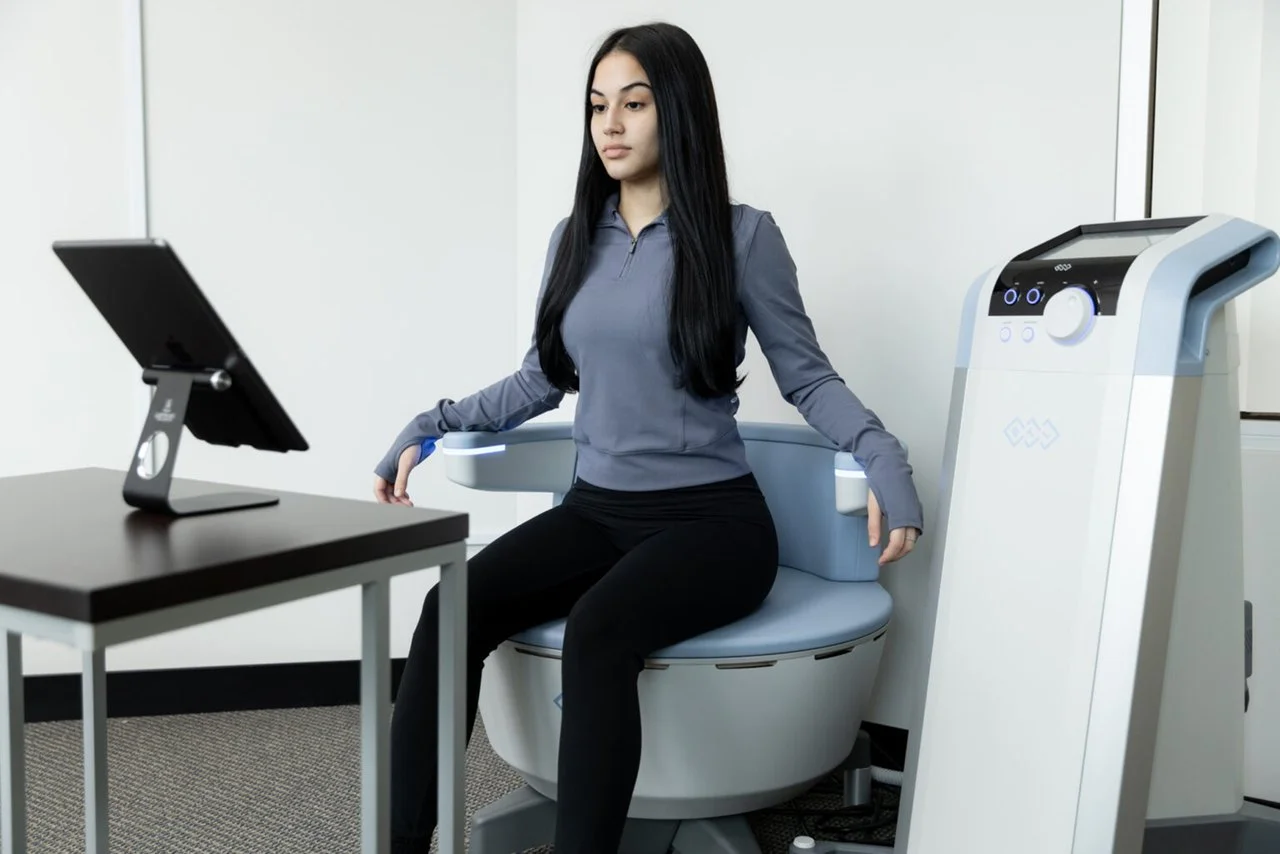
Bladder leaks are one of the most common health problems nobody wants to bring up. They are far more common than most people realize, yet many quietly plan their days around bathrooms, pack spare clothes, or give up the activities that set off a leak. If that sounds familiar, there is a comfortable, non-invasive option worth knowing about, and it does not involve surgery, medication, or even undressing. It is called Emsella, and it has quietly become one of the most asked-about treatments at our Sudbury clinic.
What Emsella actually is
Emsella looks like an ordinary chair, but it works like a very focused gym for your pelvic floor. The seat delivers high-intensity focused electromagnetic energy, usually shortened to HIFEM, which stimulates the pelvic-floor muscles to contract far more deeply and rapidly than you could manage on your own. A single session triggers thousands of these contractions, a volume of pelvic-floor exercise no one could realistically do by hand. Over a series of sessions, those contractions rebuild strength and endurance in the muscles that hold the bladder closed. The National Institute of Diabetes and Digestive and Kidney Diseases explains that strengthening the pelvic floor is one of the most reliable ways to improve bladder control, and that is exactly the job the Emsella incontinence treatment at our Sudbury clinic is designed to do.
Why the pelvic floor matters
Think of the pelvic floor as a hammock of muscle stretched across the bottom of the pelvis. It supports the bladder and helps keep the urethra sealed until you decide otherwise. When those muscles weaken, whether from childbirth, menopause, prostate surgery, aging, chronic coughing, or years of heavy lifting, the seal loses its grip. The result is stress incontinence, the leak that escapes when you laugh, sneeze, or pick up a grandchild, or urge incontinence, the sudden, hard-to-ignore need to go right now. Many people live with a mix of both. MedlinePlus has a clear overview of the different types, and identifying yours is part of the first visit, because it shapes the plan.
What a session feels like
This is the part that surprises people most: you stay fully clothed the entire time. You simply sit on the Emsella chair, we position you so the energy reaches the right muscles, and the session runs for about 28 minutes. Most people describe a tingling sensation and a series of strong but painless muscle contractions, a strange feeling at first that quickly becomes easy to relax through. Many patients read or catch up on their phone while the chair does the work. There is no downtime, no soreness that keeps you from your routine, and no recovery instructions beyond drinking some water. Patients regularly come in on a lunch break from Sudbury, Wayland, or Framingham and go straight back to their day.
Who it helps
Emsella was built for the bladder-control problems that pelvic-floor weakness drives:
- Stress urinary incontinence, the leaks triggered by coughing, sneezing, laughing, or exercise
- Urge incontinence and overactive bladder, the frequent, sudden need to urinate
- Mixed incontinence, which combines both patterns
- General pelvic-floor weakness in both women and men, including after childbirth or prostate treatment
It is not only a women’s treatment. Men dealing with leaks or urgency, especially after prostate procedures, often benefit from the same strengthening effect.
When results show up
Pelvic-floor strengthening is a training process, not a light switch. A typical plan involves a short series of sessions spread over a few weeks, and improvement builds as the muscles regain strength. Some people notice a difference after the first few sessions, while for others the change arrives more gradually: fewer pads, fewer nighttime trips, more confidence on a long car ride. Because the gains come from real muscle conditioning, keeping those muscles active helps maintain them, and some patients choose occasional maintenance sessions to protect the strength they have built.
How it fits into whole-person care
Bladder control rarely comes down to a single factor. Extra abdominal weight, for instance, puts steady downward pressure on the bladder and pelvic floor, which can worsen leaks even in someone doing everything else right. That is why incontinence care at Restore sits alongside our weight loss programs, where reducing that pressure reinforces what Emsella rebuilds. For patients who want structured, supervised support, our weight loss management program pairs naturally with pelvic-floor strengthening, easing the pressure above the bladder while the chair strengthens the support below it. Simple habits help too. Spacing fluids through the day, easing up on caffeine, and staying ahead of constipation all take strain off the bladder between sessions.
Is Emsella right for you?
Most healthy adults dealing with leaks, urgency, or pelvic-floor weakness are good candidates. It is not suitable for everyone, though. Pregnancy and certain metal or electronic implants rule it out, so a brief consultation is how we confirm fit before scheduling anything. The Urology Care Foundation offers helpful background on incontinence and the full range of treatment options if you want to read more before coming in. One note on timing: leaks that appear suddenly, pain with urination, or blood in the urine deserve a prompt medical evaluation rather than a wait-and-see approach.
Incontinence has a way of shrinking life, fewer long walks, fewer road trips, a running mental map of every restroom in MetroWest. It does not have to stay that way. We treat it the way we treat everything at our Sudbury clinic, discreetly, without surgery or medication, and with a plan built around the root cause. If you have been quietly working around a bladder problem, this is one conversation worth having.
Ready to feel better?
Book your $49 new-patient spinal decompression session, exam and consultation included.